O2i Design’s Role
O2i Design worked closely with Glastonbury Town Council, statutory consultees and the wider consultant team throughout the project. We led the architectural design and planning process from the first ideas through to securing all necessary statutory approvals.
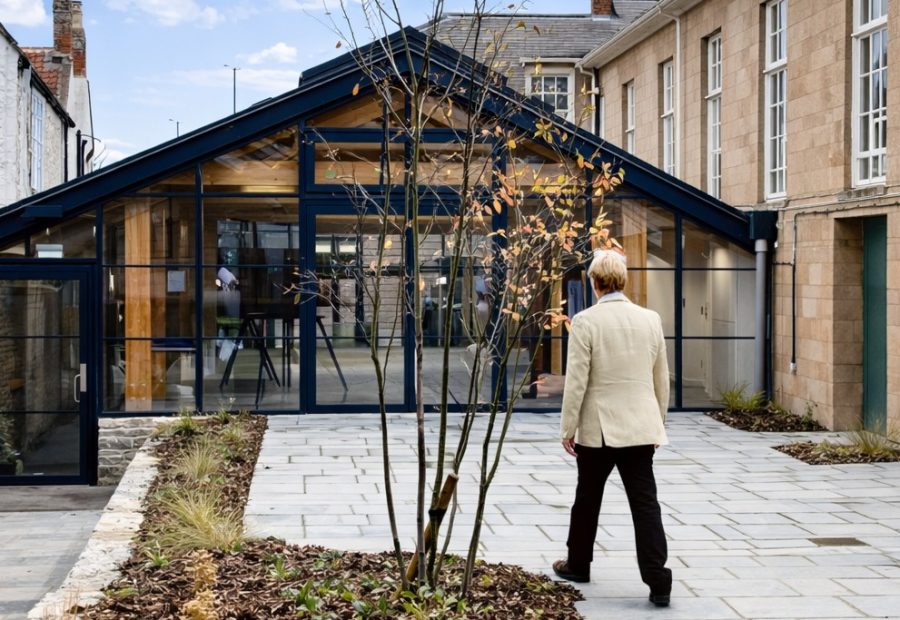
The project formed part of a wider programme to improve Glastonbury’s historic centre. It created a welcoming Community Health and Wellbeing Centre while enhancing the setting of Glastonbury Abbey Yard.
The site includes the Grade II* listed Town Hall, the Grade II listed St Dunstan’s House and the Scheduled Monument of Glastonbury Abbey. These nationally important heritage assets required great care. Every design decision balanced conservation with modern community needs. The project shows how thoughtful listed building refurbishment can protect historic character while creating accessible spaces for everyday use.
Creating an Accessible Community Building
Making the building accessible to everyone was one of the project’s main goals.
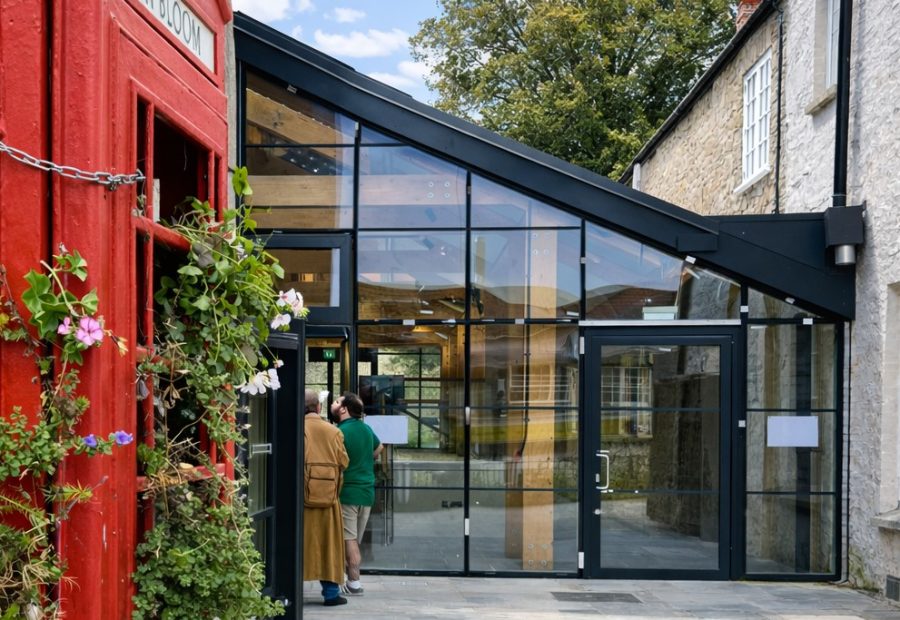
The refurbishment introduced step free access throughout the building. New lifts, ramps, automatic doors and accessible facilities were added, including a fully compliant Changing Places facility.
Today, the building provides flexible spaces for health services, wellbeing activities, local organisations and public events. The Glastonbury Information Centre has also returned, strengthening the building’s role as an important civic destination.
Sustainable Design
Historic buildings have an important role to play in a more sustainable future.
The refurbishment improved energy performance with better roof insulation, high performance glazing, energy efficient LED lighting and low carbon heating provided by air source heat pumps. Building Integrated Photovoltaic panels generate renewable electricity. Underground drainage systems also help manage surface water and reduce the risk of flooding during heavy rainfall.
Historic materials were retained and reused wherever possible. This reduced waste and preserved the building’s character.
Protecting Wildlife and Heritage
Conservation extended beyond the buildings themselves. The project also protected the wildlife and biodiversity that form an important part of Glastonbury’s historic environment.
Working with ecological specialists, the design included a dedicated bat loft, bat friendly construction methods and a carefully planned lighting scheme. These measures protect wildlife while creating a safe and welcoming environment for visitors.
The project shows how conservation architecture can balance heritage, sustainability and modern public use. It also demonstrates how historic buildings can continue to serve their communities for generations to come.
Award Winning Architecture in Somerset
The completed project has transformed both St Dunstan’s House and the surrounding public spaces.
Visitors now benefit from improved accessibility, welcoming public spaces and a vibrant Community Health and Wellbeing Centre that supports local people every day. The project has strengthened connections across the town, encouraged wider public use and enhanced one of Somerset’s most important historic settings.
For O2i Design, this project reflects the way we approach every commission. We create thoughtful architecture that respects the past while designing for the future. Our work includes listed building refurbishment, heritage architecture, planning applications, planning and listed building consent, bespoke homes, commercial developments and community buildings throughout Somerset and the South West.
Looking for Heritage Architects in Somerset?
If you are planning work to a listed building, heritage asset or community building, O2i Design can help. We provide architectural design, heritage consultancy, planning applications, planning and listed building consent and conservation architecture across Somerset and the South West.
St Dunstan’s House Community Health & Wellbeing Centre shows how good architecture, careful planning and close collaboration can bring historic buildings back into everyday use. It respects the past, meets today’s needs and creates lasting social, environmental and economic benefits for future generations.
Explore our portfolio of community architecture projects. For more information about the project, please visit here.
For more information about the SW Best Project Award 2026 by the Royal Town Planning Institute you can read more about it here