The Challenge
Designing sustainable homes involved far more than incorporating renewable technologies.
The development aimed to achieve Code for Sustainable Homes Level 5, one of the highest environmental standards in the UK at the time. This demanded exceptionally high levels of energy efficiency, water conservation and responsible material selection, while still creating homes that were practical, comfortable and attractive places to live.
The challenge was to bring these technologies together in a way that worked as a complete building rather than as a collection of individual features.
The Design
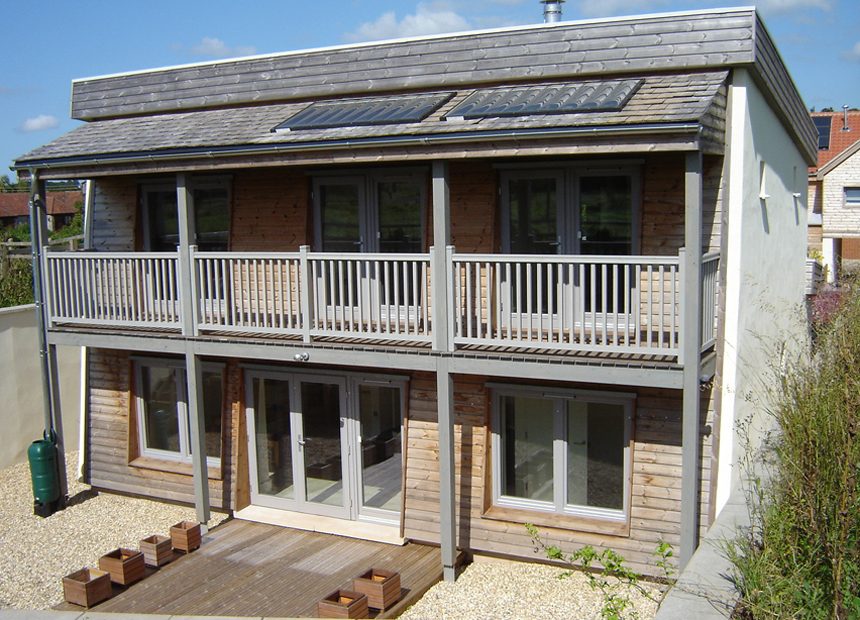
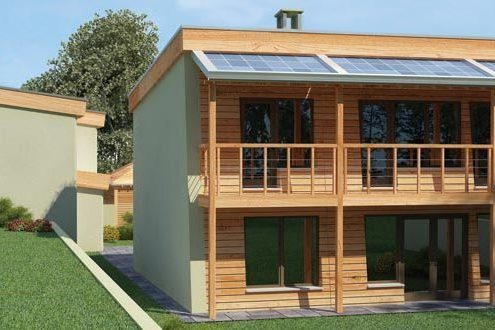
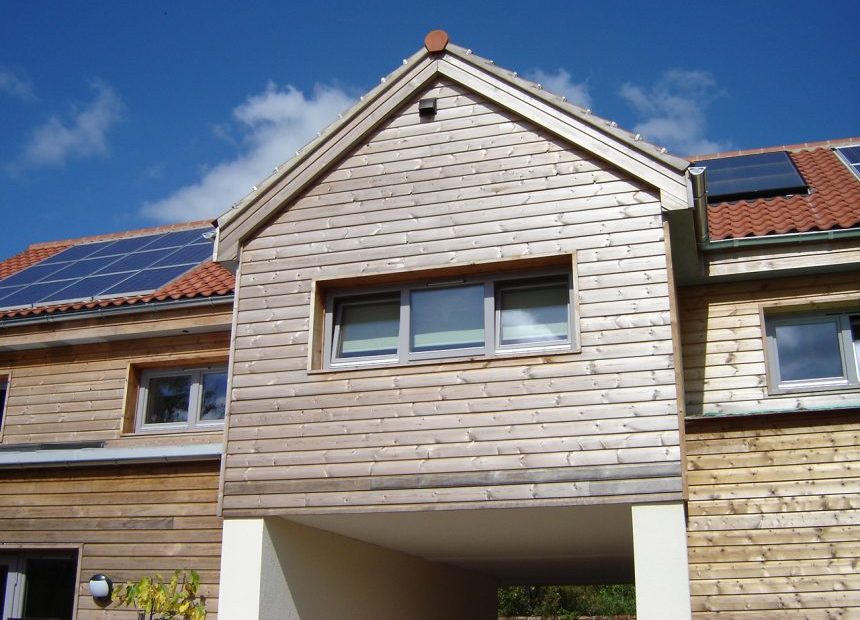
Working closely with the developer, O2i Design helped create five low-carbon homes that combined passive design principles with carefully selected renewable technologies.
The homes incorporated high levels of insulation, renewable energy generation, mechanical ventilation with heat recovery, rainwater harvesting and biomass heating to reduce energy demand and minimise running costs. Sustainable materials and off-site manufactured timber components also helped improve construction quality while reducing waste.
Rather than relying on a single innovation, the development demonstrated how a range of complementary design decisions could work together to improve the environmental performance of the homes.
The Outcome
The completed development demonstrated what could be achieved through carefully integrated sustainable design.
The project also reflected the commercial realities of its time. Delivering homes to such demanding environmental standards inevitably increased construction costs, and the wider housing market had not yet fully recognised the long-term value of low-carbon homes. In many respects, the development was ahead of its time.
Its technical success, however, attracted national attention.
Unlike many residential developments, The Old Apple Store became the subject of post-occupancy research through the Good Homes Alliance LowCarb4Real and Good Homes Alliance Monitoring Programme. Researchers monitored energy use, water consumption, indoor environmental quality and residents’ experiences, helping improve understanding of how sustainable homes perform in everyday life rather than under laboratory conditions.
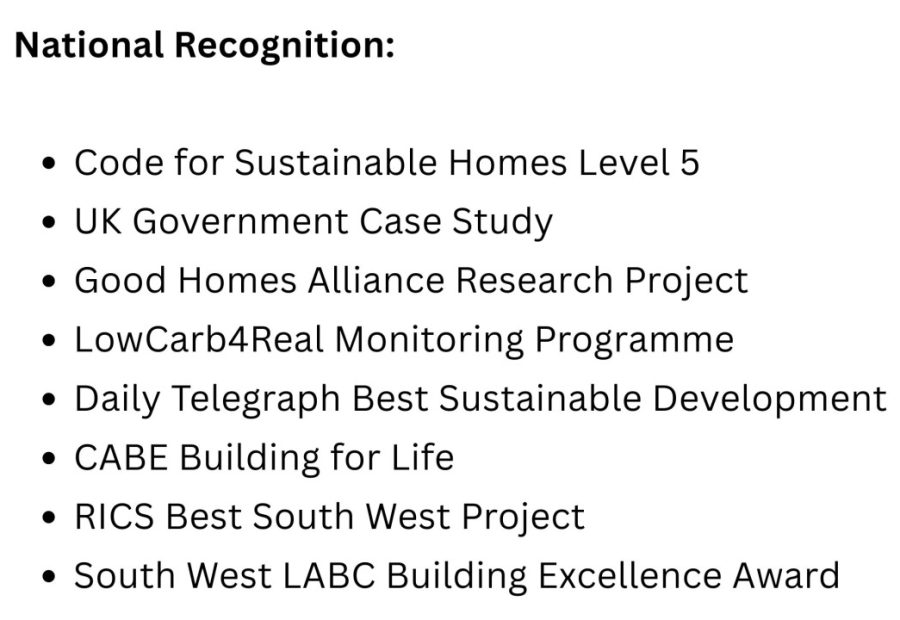
The development also received widespread recognition, including The Daily Telegraph Best Sustainable Development Award, CABE Building for Life, Regen SW Best Sustainable Development, RICS Best South West Project and the South West LABC Building Excellence Award. It was later selected by the UK Government as a national case study for the Code for Sustainable Homes.
More than fifteen years later, many of the principles explored by the project, including improved building fabric, renewable energy generation, heat recovery ventilation and post-occupancy performance monitoring, have become widely accepted within sustainable residential design.
What We Learned
Successful sustainable housing is measured by performance, not promises.
This project demonstrated the value of combining thoughtful architectural design with long-term monitoring of how buildings perform once people move in. The lessons learned from measured energy performance and resident experience helped inform future thinking about low-carbon housing.
It also showed that pioneering projects often face commercial challenges before the wider market catches up. While the development was ahead of its time, many of the ideas explored here have since become recognised as good practice within sustainable residential design.
Why This Project Still Matters
The Old Apple Store was more than an award-winning housing development. It became part of the wider conversation about how sustainable homes should be designed, built and evaluated.
By combining ambitious environmental standards with post-occupancy research, the project helped demonstrate that the success of low-carbon housing depends not only on innovative technology, but on creating homes that perform well for the people who live in them.
The development won several awards: The Daily Telegraph’s Best Sustainable Development (2006), the CABE Building for Life (2007), Regen SW Best Sustainable Development award, the RICS Best South-West Project (2008) and SW LABC Building Excellence Awards for Best Sustainable Project (2011). The development was featured as one of four national case studies of best-practice sustainable architecture in a DCLG Sustainable Housing publication (Code for Sustainable Homes) and Old Apple Store, Stawell – LowCarb4Real – Good Homes Alliance. The project was also featured in the Telegraph’s article – Are eco-homes worth building? .